How to Remember Everything with Jrnl and Semantic Search
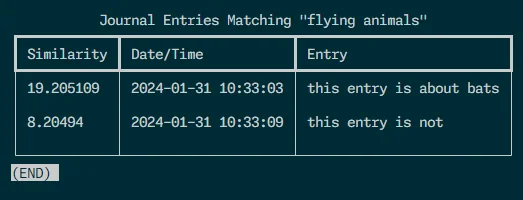
I am bad at taking notes, and I want to get better. There are two main obstacles that I face when I write down things that I want to remember.
Seeing Underwater with Neural Networks
Nothing in this article is classified. Where I refer to Navy sonar and TMA data, I have cited official DoD sources in which the data has been publicly released. If you think I’ve made a mistake, you can email me at the address on my homepage.
I was lucky enough to deal with a lot of interesting problems during my time in the Navy. Today I’d like to share one that many Submariners encounter on a daily basis, and an unconventional way that I found to solve it.

Submarines employ sonar constantly to track targets, surface safely, and avoid detection. Sonar is a pretty famous technology, and you’ve probably heard that there are two principal types: active and passive. The following image is helpful.
Thoughts on Leaving the Navy
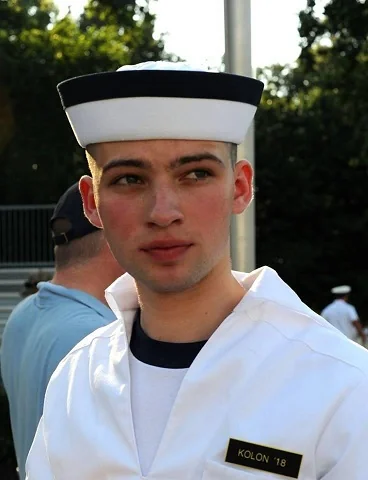
It’s fitting that I spent my last day in uniform only steps from where I first put it on.
Cycling Efficiency
Norfolk is a pretty bike friendly city. I recently got a Trek FX 3 Disc to ride around, and I’ve become familiar with some of the trails. A few of my favorite spots are the Elizabeth River Trail, Back Bay, and the Great Dismal Swamp canal trail.
While cycling, I sometimes ask myself: what gear should I be in when accelerating, and what gear should I stay in while cycling at a certain speed? I wanted to use some math and simulation to explore this question. I was heavily inspired by Steve Gribble’s wattage to speed graph, but wanted to also look at how gear shifts affect the speed and power of the bike.
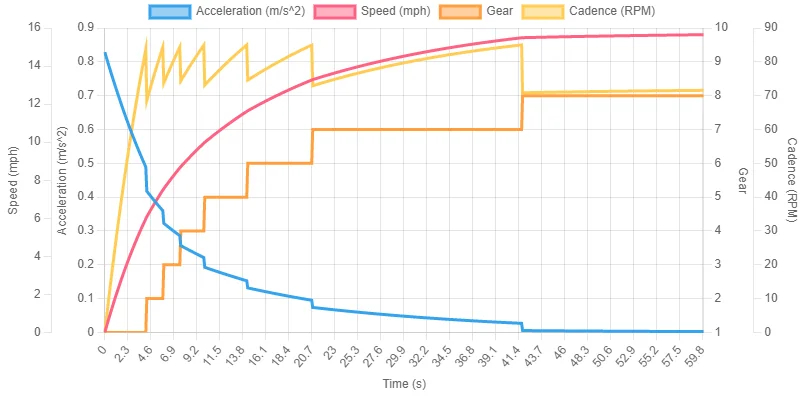
Below is a simulation of a person’s speed, acceleration, gear, and cadence as they accelerate from a standstill. There’s also a power graph which shows how this person’s power is used. Read on to learn how I built it, or just play with the values and see what happens.
Illustrating Poetry with AI
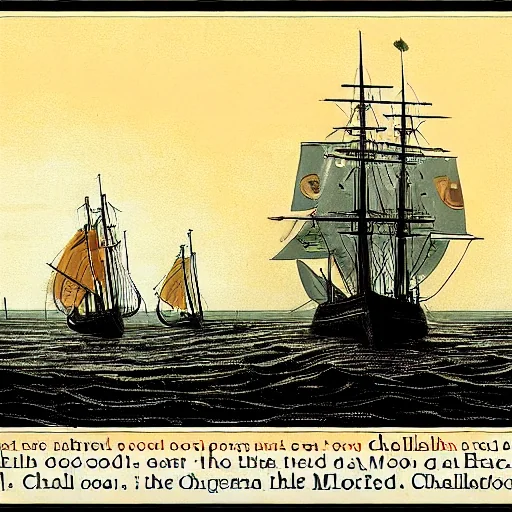
In April, OpenAI made the news again, for a new text-to-illustration tool called Dall-E 2. Dall-E 2 is a deep learning model based on a transformer architecture. Transformers have been behind a lot of the most recent AI innovations, like GPT-3, a natural language processing model, which was used to generate the famously poetic ChatGPT. GPT-3 was also used to create OpenAI Codex, the software which powers the shockingly useful GitHub Copilot. If you’re into coding and you haven’t tried the free trial, you’re missing out.